Description
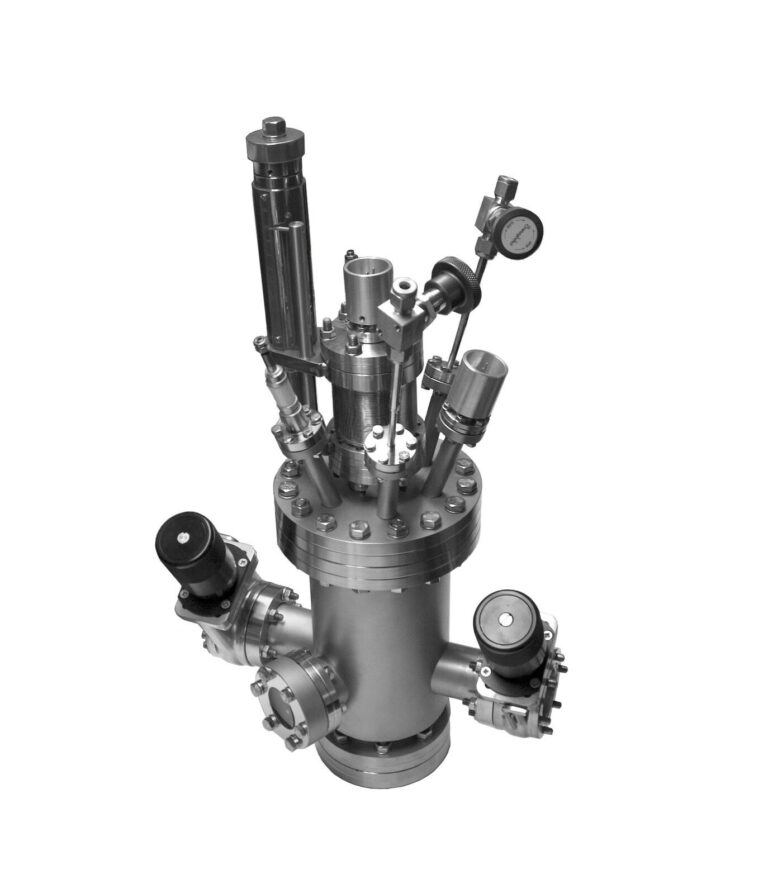
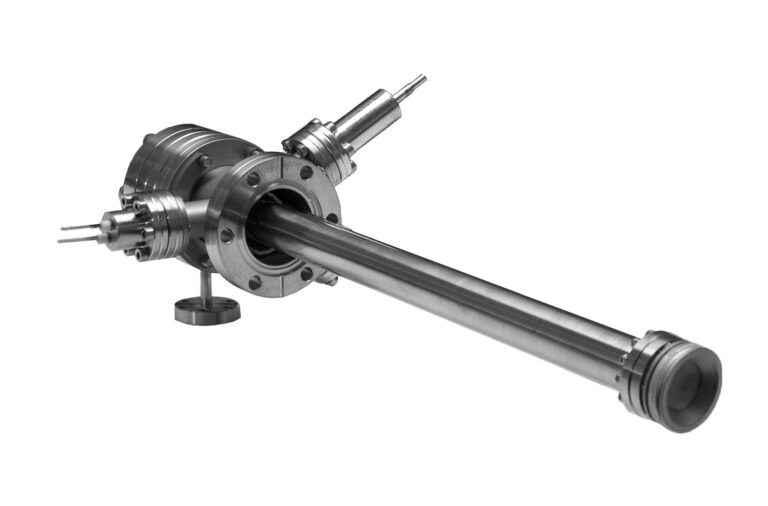
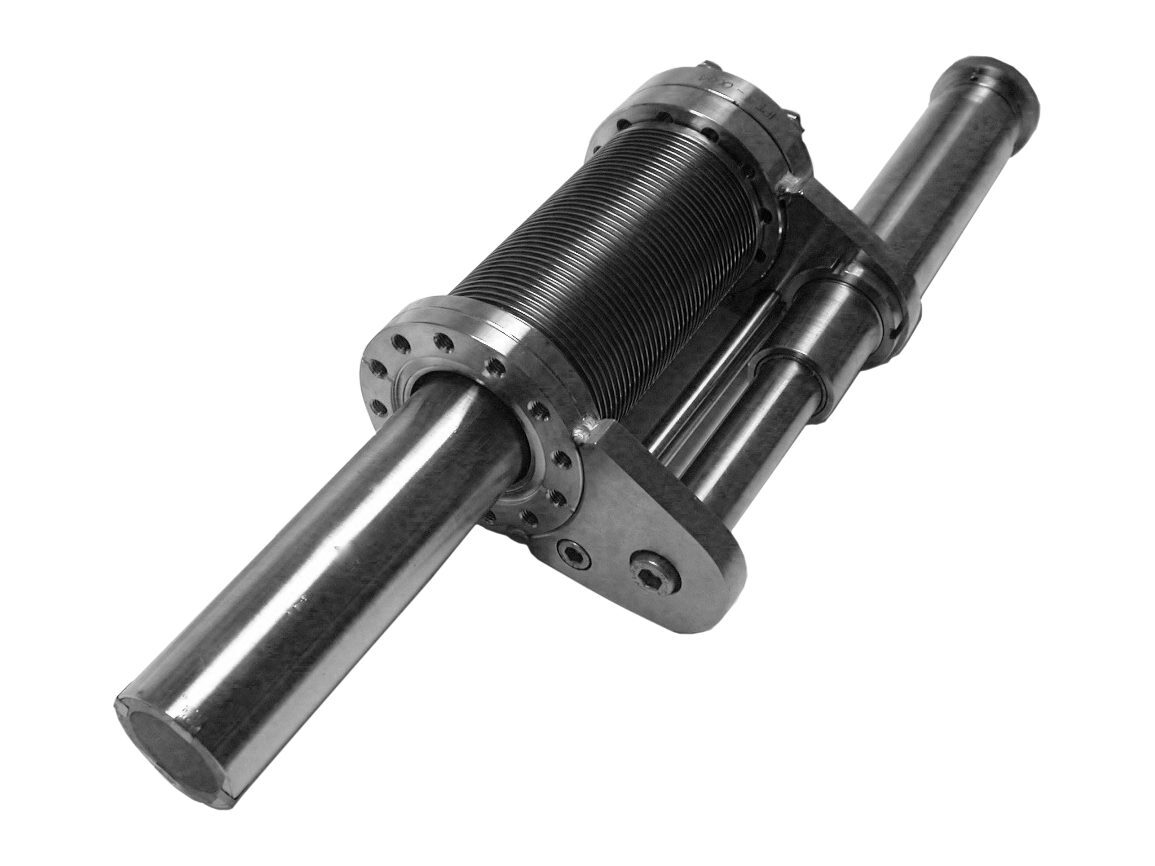
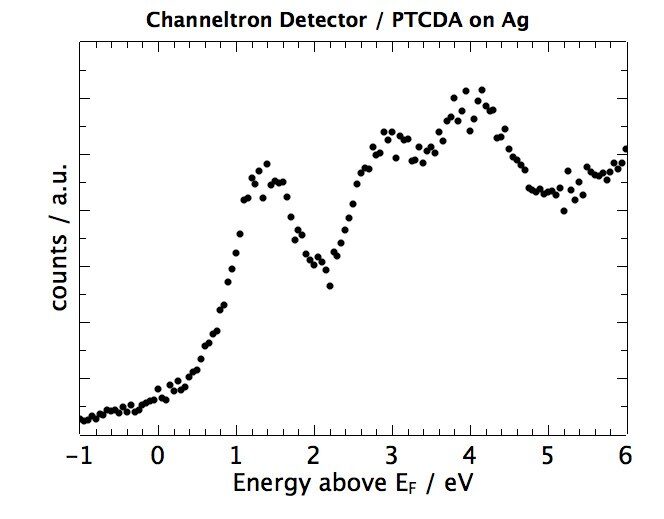
The IPES 2000 probes the density of unoccupied electronic states between the Fermi and the vacuum level, which photoemission (PES) cannot reach. Its solid state UV bandpass photon detector is a NaCl-coated channeltron with preamplifier behind a SrF₂ entrance window; the OmniVac ES 100 low-energy electron source supplies the incident electrons. Detector and electron source each mount on a DN 40 CF flange.
An indirectly heated BaO cathode gives a high beam current at low energy with a narrow energy distribution. Beam energy, beam current and spot size are set independently over wide ranges. The data acquisition software sets the electron kinetic energy and determines optimum settings for the channeltron and the preamplifier.
The channeltron detector needs no gas handling or detector setup: switch it on and measure. For higher UV sensitivity and shorter measurements, the IPES 3000 uses a Geiger-Müller detector.
Options
- Other window materials and detector configurations
Technical specifications
| Parameter | Value |
|---|---|
| Detector | NaCl-coated channeltron (solid state detector) |
| Window | SrF₂ (standard), other materials possible (e.g. LiF, CaF₂) |
| Resolution (overall) | 0.9 eV |
| Mounting flange | DN 40 CF |
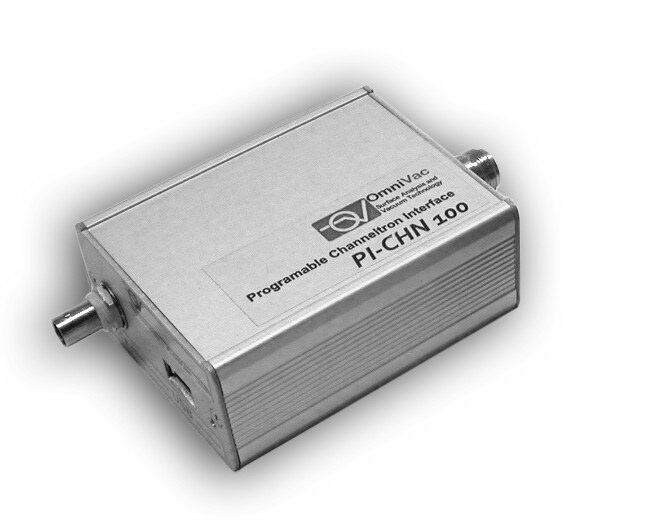
| Data acquisition | PI-CHN 100 preamplifier and pulse counter with USB interface |
| Data processing | Software for signal counting |
| Remote control | Electron source energy control (USB) |
| ES 100 electron source — Beam energy | 1 – 200 eV |
| ES 100 electron source — Beam current | 1 nA – 20 µA |
| ES 100 electron source — Spot size (20 mm working distance) | 0.5 – 5 mm |
| ES 100 electron source — Working distance | 5 – 100, 20 recommended mm |
| ES 100 electron source — Cathode | BaO, indirectly heated |
| ES 100 electron source — Mounting flange | DN 40 CF |
| ES 100 electron source — Power supply | All necessary voltages to drive the electron source |
| ES 100 electron source — Interface | USB |